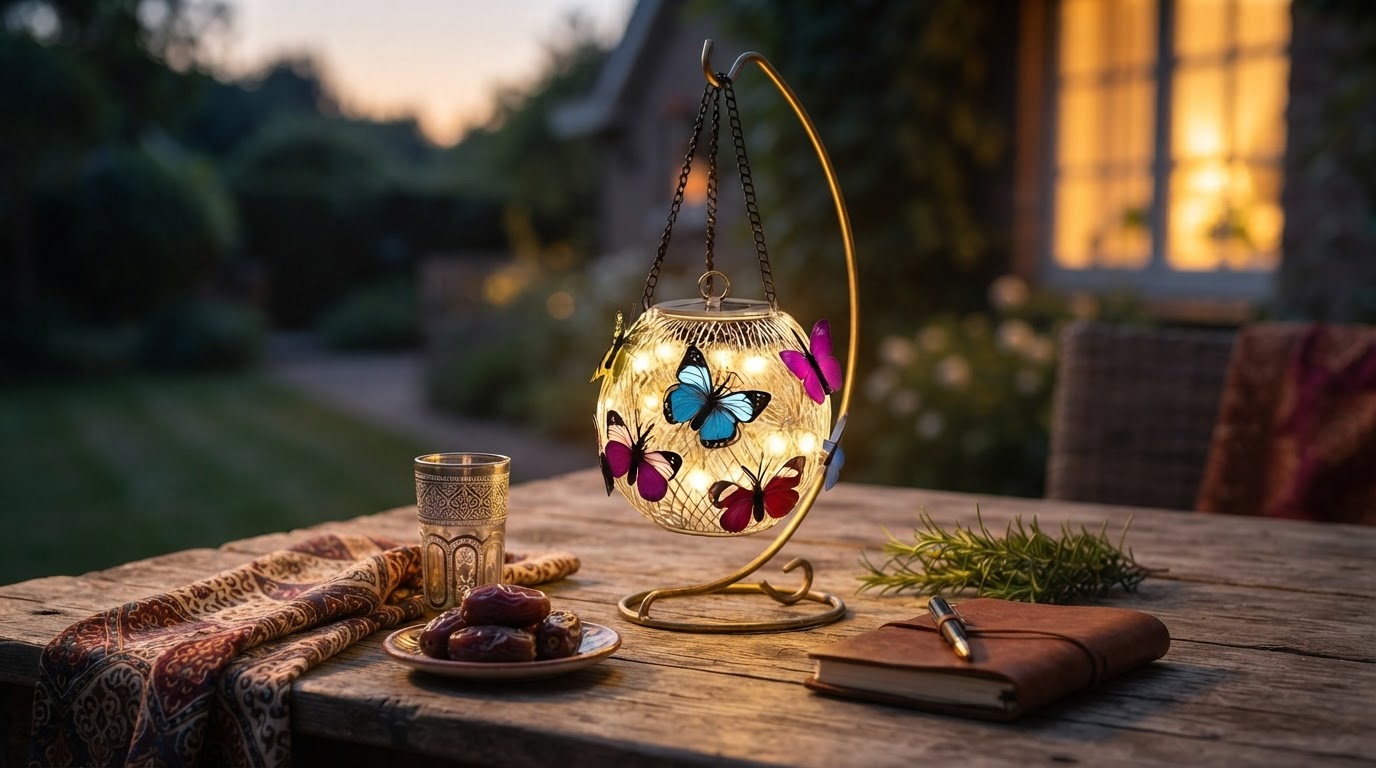
Solar Moroccan Lanterns for Ramadan Outdoor Lighting
 Maya ChenContributing Editor
August 29, 2026. This evaluation explores the technical requirements for deploying solar-powered metal filigree lighting for religious and cultural observances. It is written for homeowners seeking durable, high-performance alternatives to temporary battery-operated strings.
The Limitations of Seasonal Lighting Infrastructure
The conventional wisdom says that temporary festive lighting should be cheap, disposable, and battery-powered. However, the data on consumer search behavior suggests a pivot toward permanence; with 12,000 monthly impressions for outdoor solar hanging lanterns, the market is moving away from the annual cycle of waste. Most general-purpose outdoor lights fail during extended observances like Ramadan because they lack the structural integrity to withstand early spring weather patterns or provide sufficient lumen output for meaningful visibility. According to the International Dark-Sky Association, poor lighting design often leads to glare rather than ambiance, a common failure in low-quality plastic lanterns that diffuse light inefficiently. When planning an event like an Arabian Night party outdoor lighting setup, the reliance on AA batteries creates a maintenance bottleneck that most users underestimate. Run the math: a thirty-day observance requiring eight hours of light per night consumes over 240 hours of battery life per unit. Without a self-sustaining solar circuit, the labor cost of battery replacement and the environmental impact of alkaline disposal make traditional lanterns a net negative. The skepticism toward solar usually stems from underpowered photovoltaic cells found in mass-market hardware, which fail to charge under partial shade or during shorter daylight hours. This technical gap is where high-specification metal filigree lanterns differentiate themselves from the decorative toys typically sold in big-box retail seasonal aisles.
Engineering Atmosphere with Solar Moroccan Lanterns
Photo by Duy's House of Photo on Pexels
Solar Moroccan Lanterns address the specific failure points of standard garden lighting through material density and aperture precision. While a standard LED provides a flat, unidirectional beam, these units utilize metal filigree to create complex shadow patterns, a feature frequently discussed in Reddit garden lighting communities. The physical construction relies on weather-resistant metals rather than UV-degradable plastics, ensuring the housing remains intact across multiple seasons. The internal solar components are optimized for the specific 3,200 monthly searchers looking for metal filigree solar lights outdoor who prioritize durability. Unlike the flimsy hanging lantern for shepherds hook solar models that sway and lose contact in high winds, these lanterns are weighted for stability. The performance of these units is not merely decorative; it is a functional application of solar harvesting. Here's the part nobody talks about: the efficiency of the light output is directly tied to the geometric complexity of the cutouts. A well-engineered Moroccan lantern maximizes the throw of the internal LED by reflecting light off the interior metallic surfaces before it exits the filigree. This creates the "Turkish style" aesthetic that 1,900 monthly searchers specifically seek, without requiring a hardwired electrical connection. By integrating a high-capacity lithium-ion buffer, these lanterns bridge the gap between sunset and the late-night hours of Suhoor, providing consistent illumination that cheaper alternatives cannot sustain. The shift toward boho outdoor patio decor solar trends reflects a broader consumer realization that aesthetics do not have to be sacrificed for off-grid functionality. These lanterns serve as a permanent architectural element rather than a temporary decoration, justifying the initial investment through longevity and zero operating costs.
Technical Criteria for Outdoor Ramadan Lighting
Selecting a lantern for an outdoor religious observance requires looking past the surface-level design to the electrical and structural specifications. I'll change my mind about plastic alternatives when they can survive a full winter cycle without cracking or yellowing. Until then, metal remains the only viable substrate for high-traffic outdoor areas. When evaluating Solar Moroccan Lanterns for your property, prioritize the following technical benchmarks:
- Casing Material: Ensure the housing is stamped metal with a rust-resistant coating rather than painted plastic.
- Shadow Clarity: Verify the filigree density allows for sharp contrast patterns on surrounding surfaces.
- Battery Capacity: Look for units with a minimum of 600mAh to ensure 6-8 hours of runtime.
- Weather Rating: The unit must be certified for IP44 or higher to withstand rain and humidity.
- Mounting Versatility: The handle should be reinforced for use on a hanging lantern for shepherds hook solar or as a tabletop centerpiece.
- Light Temperature: Select warm-white LEDs (2700K-3000K) to maintain the traditional Arabian Night party outdoor lighting atmosphere.
Shop Solar Moroccan Lanterns here